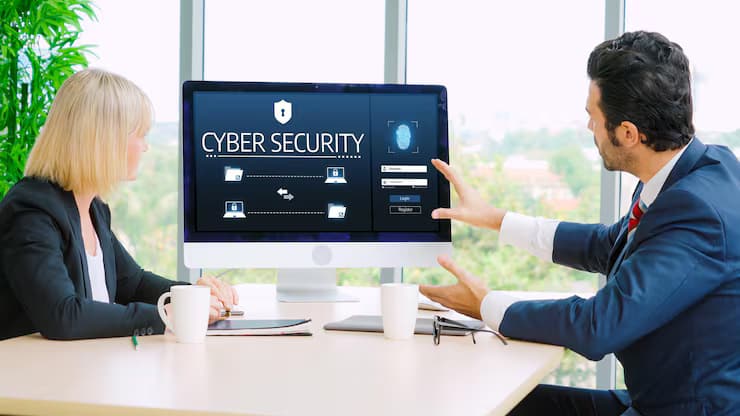
Technology has transformed the way businesses operate. From cloud-based collaboration and online payments to remote work and AI-powered automation, organizations of every size now rely heavily on digital systems. While these advancements improve efficiency and create new opportunities, they also expose businesses to an increasing number of cyber threats.
Cybersecurity is no longer just an IT concern; it has become a critical business priority. Whether you run a startup, a retail store, a healthcare organization, a financial institution, or a multinational enterprise, protecting your digital assets is essential for maintaining customer trust, ensuring business continuity, and safeguarding sensitive information.
Cybercriminals are becoming more sophisticated every year. Modern attacks are designed to exploit not only technical vulnerabilities but also human behavior. A single phishing email, weak password, or unsecured device can give attackers access to confidential data, financial records, and customer information.
Businesses that underestimate cybersecurity often discover its importance only after experiencing a costly breach. The financial damage, operational downtime, legal consequences, and reputational loss can take years to recover from.
This is why cybersecurity is essential for every business. It is not merely about installing antivirus software or firewalls; it is about building a proactive security strategy that protects every aspect of your organization.
The Growing Cybersecurity Landscape

he digital economy continues to expand rapidly, and so does cybercrime. Organizations now manage vast amounts of sensitive information across multiple platforms, including cloud applications, mobile devices, customer portals, and remote work environments.
This digital transformation has significantly increased the number of potential entry points for cybercriminals.
Today’s attackers use advanced techniques such as:
- Phishing campaigns
- Ransomware attacks
- Malware infections
- Business Email Compromise (BEC)
- Insider threats
- Credential theft
- AI-assisted cyberattacks
- Cloud infrastructure attacks
Unlike traditional hackers who mainly targeted large corporations, modern cybercriminals actively attack businesses of every size because smaller organizations often have weaker security measures.
No business is too small to become a target.
Why Cybersecurity Is Essential for Every Business
Cybersecurity protects much more than computers. It safeguards your customers, employees, financial assets, intellectual property, and business reputation.
Let’s explore the key reasons every organization should prioritize cybersecurity.
Every business stores valuable information.
1.Protecting Sensitive Business Data
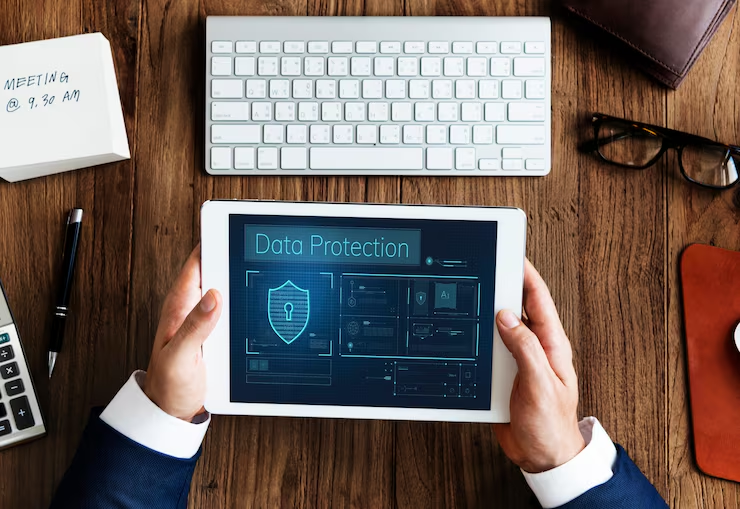
Examples include:
- Customer records
- Employee information
- Financial reports
- Payment details
- Contracts
- Business strategies
- Product designs
- Source code
- Intellectual property
If this information falls into the wrong hands, the consequences can be devastating.
Data breaches may lead to identity theft, financial fraud, legal penalties, and loss of customer confidence.
A strong cybersecurity strategy ensures that sensitive information remains encrypted, monitored, and accessible only to authorized users.
2. Preventing Financial Loss

Cyberattacks are expensive.
The cost extends far beyond stolen money.
Businesses often face:
- System recovery costs
- Business interruption
- Lost productivity
- Customer compensation
- Legal expenses
- Regulatory fines
- Reputation management
- IT infrastructure rebuilding
Even a single ransomware attack can force an organization to suspend operations for days or weeks.
Preventive cybersecurity investments are significantly more affordable than recovering from a major security incident.
3. Maintaining Customer Trust

Trust is one of the most valuable assets a business can build.
Customers expect organizations to protect their personal information.
When businesses experience data breaches, customers often lose confidence and choose competitors instead.
Strong cybersecurity demonstrates that your organization values privacy, security, and responsible data management.
Displaying secure payment systems, SSL encryption, multi-factor authentication, and privacy compliance helps reassure customers that their information is protected.
In today’s competitive market, cybersecurity has become a competitive advantage.
4. Trust is one of the most valuable assets a business can build.

Customers expect organizations to protect their personal information.
When businesses experience data breaches, customers often lose confidence and choose competitors instead.
Strong cybersecurity demonstrates that your organization values privacy, security, and responsible data management.
Displaying secure payment systems, SSL encryption, multi-factor authentication, and privacy compliance helps reassure customers that their information is protected.
In today’s competitive market, cybersecurity has become a competitive advantage
Unexpected cyber incidents can completely disrupt business operations.
Imagine losing access to:
- Accounting systems
- Customer databases
- Internal communications
- Website operations
- Cloud applications
- Inventory management
Without proper cybersecurity measures, recovery can take days or even weeks.
A comprehensive cybersecurity strategy includes:
- Regular backups
- Disaster recovery planning
- Incident response procedures
- Continuous monitoring
- Redundant infrastructure
These practices allow businesses to recover quickly and minimize operational downtime.
5. Supporting Remote and Hybrid Work

Remote work has become a permanent part of modern business.
Employees now access company resources using:
- Home Wi-Fi networks
- Personal laptops
- Smartphones
- Tablets
- Cloud collaboration tools
While remote work increases flexibility, it also expands the organization’s attack surface.
Businesses should implement:
- VPN access
- Multi-factor authentication (MFA)
- Endpoint protection
- Device management policies
- Secure cloud access
- Employee cybersecurity training
These security measures significantly reduce the risk of unauthorized access.
The Human Factor: Your First Line of Defense
Technology alone cannot stop every cyberattack.
In many cases, cybercriminals succeed because they exploit human mistakes rather than technical weaknesses.
An employee might click on a convincing phishing email, reuse a weak password across multiple accounts, or unknowingly download malicious software disguised as a legitimate file. These seemingly small actions can provide attackers with a gateway into an organization’s entire network.
Creating a culture of cybersecurity awareness is just as important as deploying advanced security tools. Businesses should invest in regular employee training, simulated phishing exercises, password management education, and clear security policies. When every team member understands their role in protecting company data, the overall security posture becomes significantly stronger.
Cybersecurity is most effective when technology and people work together, not when they operate separately.
Emerging Cybersecurity Threats Every Business Should Watch
The cybersecurity landscape changes every year, and businesses must continuously adapt to stay protected. Attackers are no longer relying on simple viruses or outdated hacking techniques. They now use sophisticated tools, automation, and even artificial intelligence to identify vulnerabilities faster than ever before.
Understanding the latest cyber threats helps businesses build stronger defenses.
1. AI-Powered Cyber Attacks
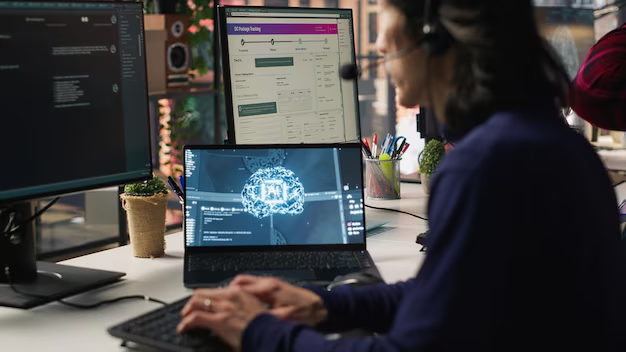
Artificial Intelligence is transforming industries, including cybercrime.
Hackers now use AI to:
- Generate convincing phishing emails
- Automate password attacks
- Scan networks for vulnerabilities
- Create deepfake voice and video scams
- Evade traditional security systems
Businesses need AI-powered cybersecurity solutions that can detect unusual behavior, respond to threats in real time, and reduce the risk of human error.
2. Ransomware Continues to Rise

Ransomware remains one of the most damaging cyber threats facing businesses today.
In a ransomware attack, criminals encrypt critical business data and demand payment to restore access. Even if the ransom is paid, there is no guarantee that files will be recovered.
The best defense includes:
- Regular offline backups
- Endpoint protection
- Email filtering
- Employee awareness training
- Continuous system updates
A proactive security strategy is always more effective than reacting after an attack.
3. Cloud Security Challenges

Cloud computing has made businesses more flexible, scalable, and cost-effective. However, cloud environments also introduce new security responsibilities.
Common cloud security risks include:
- Misconfigured cloud storage
- Weak user permissions
- Stolen login credentials
- Insecure APIs
- Lack of data encryption
Businesses should adopt a “Zero Trust” approach, where every user and device must be verified before gaining access to sensitive resources.
Cybersecurity Best Practices Every Business Should Follow
Strong cybersecurity is built on consistent habits rather than a single security product.
Every organization should implement these essential best practices.
1. Enable Multi-Factor Authentication (MFA)
Passwords alone are no longer enough.
Adding a second verification step, such as a mobile authentication app or biometric verification, greatly reduces the risk of unauthorized access.
2.Keep Software Updated
Outdated software is one of the easiest ways for attackers to gain access.
Businesses should:
- Update operating systems
- Patch applications regularly
- Replace unsupported software
- Monitor third-party software vulnerabilities
Routine updates close security gaps before attackers can exploit them.
3.Train Employees Regularly
Employees are often the first target of cybercriminals.
Regular cybersecurity awareness training should cover:
- Recognizing phishing emails
- Creating strong passwords
- Safe internet browsing
- Handling confidential data
- Reporting suspicious activity
A well-trained workforce can significantly reduce the likelihood of successful attacks.
4. Secure Every Device
Every laptop, smartphone, desktop, and tablet connected to your business network represents a potential entry point.
Businesses should implement:
- Endpoint Detection and Response (EDR)
- Device encryption
- Antivirus and anti-malware protection
- Remote device management
- Automatic security updates
Protecting endpoints is especially important in remote and hybrid work environments.
5.Create an Incident Response Plan
Even with strong defenses, no system is completely immune to cyber threats.
An incident response plan should define:
- Roles and responsibilities
- Communication procedures
- Recovery steps
- Backup restoration processes
- Customer notification guidelines
Having a documented plan allows businesses to respond quickly and minimize disruption.
The Role of AI in Modern Cybersecurity

Artificial Intelligence has become one of the most powerful tools in cybersecurity.
Instead of waiting for attacks to occur, AI continuously analyzes network activity and identifies suspicious behavior before damage is done.
AI-driven cybersecurity solutions can:
- Detect threats in real time
- Monitor user behavior
- Identify unusual login attempts
- Automatically isolate compromised devices
- Predict future attack patterns
- Reduce response times
For growing businesses, AI helps security teams work more efficiently while improving overall protection.
Compliance and Data Privacy Matter

Cybersecurity is closely connected with legal and regulatory compliance.
Many industries are required to protect customer information and maintain secure systems. Failing to meet compliance requirements can lead to financial penalties, legal action, and reputational damage.
Businesses should regularly review:
- Data protection policies
- Access controls
- Security audits
- Backup procedures
- Privacy practices
Compliance should be viewed as an ongoing commitment rather than a one-time task.
How Tokma Technologies Helps Businesses Stay Secure
At Tokma Technologies, we understand that cybersecurity is the foundation of successful digital transformation.
Our approach combines advanced technology, proactive monitoring, and industry best practices to help businesses reduce cyber risks and operate with confidence.
Our cybersecurity-focused services include:
- Security assessments and risk analysis
- Secure web and mobile application development
- Cloud security implementation
- Network security solutions
- Data protection strategies
- Secure software development practices
- IT consulting and digital transformation
- Ongoing security monitoring and support
Whether your organization is adopting cloud technologies, developing custom software, or modernizing existing systems, cybersecurity should be integrated into every stage of the process, not added as an afterthought.
Key Takeaways
Cybersecurity is no longer optional. It is a fundamental business requirement that protects operations, customers, employees, and long-term growth.
Organizations that invest in cybersecurity today are better prepared to:
- Prevent costly cyberattacks
- Protect sensitive business information
- Build customer trust
- Ensure business continuity
- Meet compliance requirements
- Support digital transformation with confidence
As technology evolves, businesses must also evolve their security strategies. Staying proactive is the key to remaining resilient in an increasingly connected world.
Frequently Asked Questions (FAQs)
1. Why is cybersecurity important for every business?
Cybersecurity protects businesses from data breaches, financial losses, ransomware, phishing attacks, and operational disruptions. It also helps maintain customer trust and supports long-term business growth.
2.Can small businesses benefit from cybersecurity?
Absolutely. Small businesses are frequent targets because attackers often assume they have weaker defenses. Investing in cybersecurity significantly reduces business risk.
3. What is the biggest cybersecurity threat today?
Ransomware, phishing attacks, AI-powered scams, credential theft, and cloud security vulnerabilities are among the most significant threats businesses face.
4. How often should businesses perform cybersecurity assessments?
Most organizations should conduct security assessments at least annually, with continuous monitoring and vulnerability testing whenever significant systems or applications change.
5. Does cybersecurity improve customer confidence?
Yes. Customers are more likely to trust businesses that demonstrate strong security practices, protect personal information, and maintain transparent privacy standards.
Conclusion
The digital world offers incredible opportunities for growth, innovation, and efficiency, but it also introduces new risks that no business can afford to ignore.
Whether you operate a small startup or a global enterprise, cybersecurity is essential for protecting your data, maintaining customer trust, ensuring uninterrupted operations, and supporting sustainable business growth.
The strongest organizations are not those that simply react to cyber threats; they are the ones that prepare for them. By combining modern security technologies, employee awareness, proactive monitoring, and AI-driven protection, businesses can build a resilient cybersecurity framework that supports future success.
At Tokma Technologies, we believe cybersecurity should be a core part of every digital strategy. As businesses continue to embrace digital transformation, investing in cybersecurity today is one of the smartest decisions you can make for tomorrow.


